In short
After a house fire in Dallas, make sure everyone is safe and stay out until a fire official clears the building. Before firefighters leave, ask for the fire report case number. Then call your insurance company and secure the property. Take photos before anything is moved, keep damaged items and receipts, and don't sign anything from a company that shows up at the scene.
Right after a fire, it's hard to know where to start. This checklist puts the most important steps in order, so you can take them one at a time.
Where are you right now?
Your first week at a glance
| When | Focus |
|---|---|
| Today | Safety, first calls, fire report case number, securing the home, photos before anything is moved, a place to stay tonight |
| Days 2–3 | A list of damaged items, receipts, a longer-term place to stay |
| By the end of week 1 | Compare restoration companies, start a call log, sort out mail and documents |
Day one: safety and the first calls
Make sure everyone is safe, stay out until a fire official clears the building, then call your insurance company and secure the property.
- Don't go back inside until Dallas Fire-Rescue or another official says it's safe.
- Don't turn utilities back on. Fire crews usually make gas and electricity safe or disconnect them before they leave. Reconnecting them is a job for the utility company or a licensed professional.
- Call your insurance company or agent. Ask what help is available right away, such as a hotel tonight or emergency board-up.
- If you rent, contact your landlord or property manager as well.
- If you have a mortgage, call your servicer. Insurance repair checks are often made out to both you and your lender.
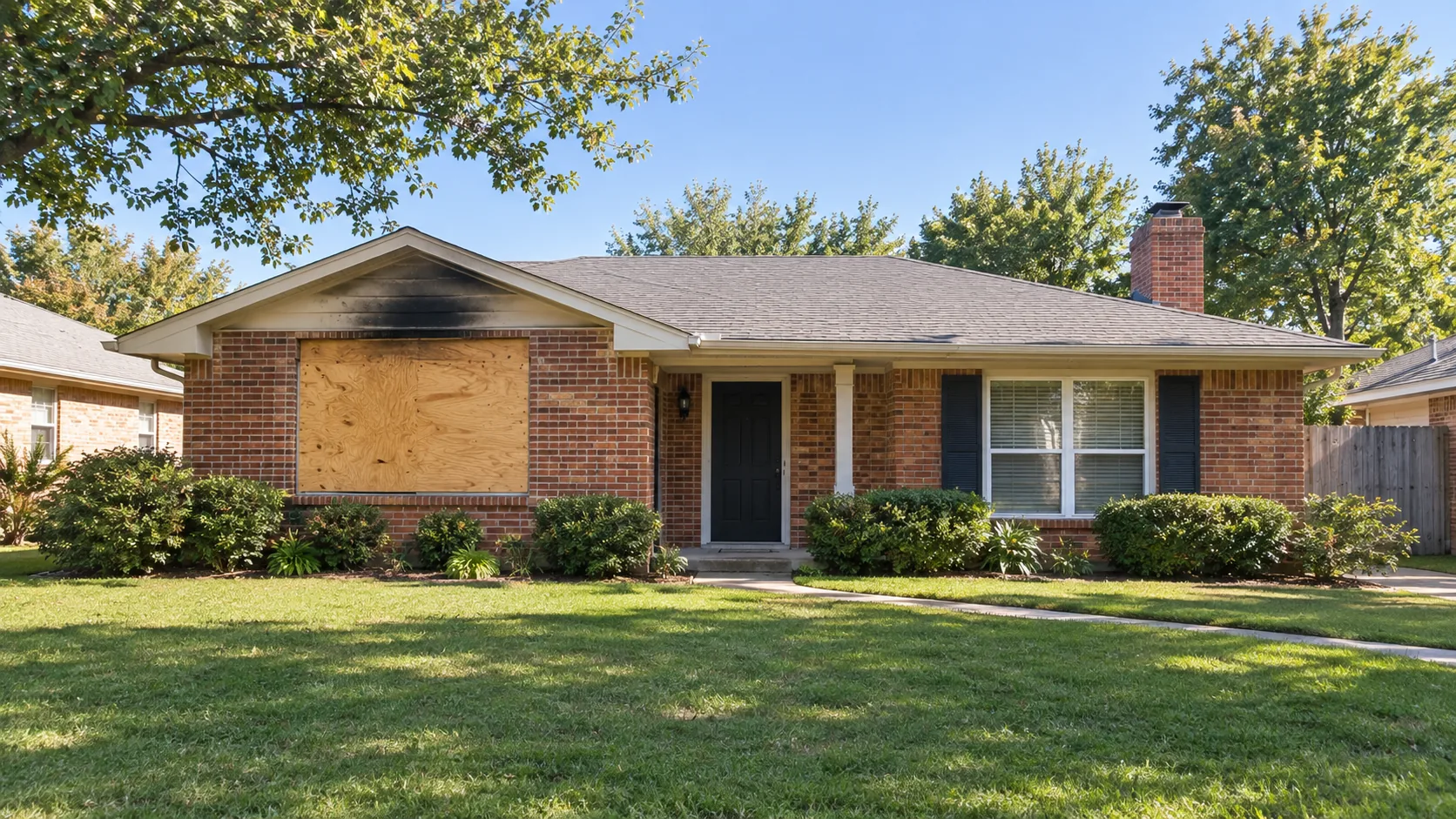
- Secure the property. You may need to board up openings to keep people and weather out. If you can't reach your insurer, a general contractor or restoration company can board up the home. Keep the receipt.
- Plan for security. Dallas police may be able to add patrols, but round-the-clock security is up to the owner or the insurance company.
- If you have pets that are missing or hurt, contact Dallas Animal Services.
How to get your Dallas fire report
Get the case number from a firefighter at the scene, then request the report through the City of Dallas open records process.
Your insurance company, mortgage lender, and others may ask for the official fire report.
- Ask a firefighter for the fire report case number and write it down.
- Submit an open records request through the City of Dallas website (dallascityhall.com).
- Watch your email. You'll be notified when the report is ready to download or print.
- Send a copy to your insurance company and keep one for your records.
If you have questions about the fire investigation itself, contact Dallas Fire-Rescue's Fire Investigation unit (see phone numbers).
What to keep and what to throw away
Throw out food, drinks, and medicine that were exposed to heat, smoke, soot, or water, after you photograph them. Keep other damaged belongings until your insurance adjuster has seen them.
Throw away:
- Food, drinks, and medicine that were exposed to heat, smoke, soot, or water, even if they look fine. Heat and smoke can make them unsafe. Photograph them and add them to your list first, then throw them away.
Keep, at least for now:
- Damaged belongings you plan to claim. Keep them, or pieces of them, until your insurance adjuster has seen them.
- Burned or damaged money. Handle it as little as possible and wrap it in plastic wrap. Many banks can exchange a damaged bill if more than half of it remains and it's clearly identifiable. Money that's more badly damaged (called mutilated currency) can be sent to the U.S. Bureau of Engraving and Printing for review.
Photos, lists, and receipts
Photograph everything before it's moved, list damaged items room by room, and save every receipt for costs caused by the fire.
- Photos and video: Record the damage where it happened, before anything is moved or cleaned. Photograph each room again before a restoration company packs up your belongings.
- A list of damaged items: Room by room, with a rough age and value for each item if you can.
- Receipts: Save receipts for hotel stays, meals, clothing, toiletries, and anything else you buy because of the fire.
- A simple log: Every time you talk to your insurer or a contractor, note the date, who you spoke with, and what you agreed on.
Printable: your first-week checklist
- [ ] Fire report case number written down
- [ ] Insurance company called; claim number written down
- [ ] Home secured (boarded up, locked, or patrolled)
- [ ] Photos and video of every room taken
- [ ] Damaged items listed room by room
- [ ] Receipts folder or envelope started
- [ ] Place to stay arranged for the next few nights
- [ ] Mortgage servicer or landlord notified
- [ ] Mail hold or forwarding set up
- [ ] Call log started
Where to stay while your home is repaired
For the first night or two, the Red Cross can often help with emergency shelter. After that, check whether your homeowners policy covers temporary housing.

- Look for "loss of use" or "additional living expenses" coverage. Many homeowners policies help pay for a hotel or rental, extra meals, and other costs above your normal living expenses while your home can't be lived in. Ask your insurer what your policy covers, for how long, and whether there's a dollar limit.
- Plan for the limits early. Some policies limit both the time and the amount. Repair delays don't always extend those limits, so it helps to know your numbers before you choose where to stay.
- Ask how payments work. Some insurers pay the hotel directly, and others reimburse you later. If it's a reimbursement, keep every receipt.
- Think about the length of the repair. If repairs will take months, a furnished short-term rental near your child's school or your work may be easier than a hotel. Ask your insurer before you sign a lease.
- If you rent, your landlord's insurance usually covers the building but not your belongings or your temporary housing. Renters insurance may help with both.
Taking care of yourself and your family
A fire is a shock, even when no one is hurt. It's normal to feel exhausted, anxious, or unable to focus for days or weeks afterward, and children often feel it too.
- Keep a short list of what you need to do today, and let the rest wait.
- Ask for help with specific tasks, such as picking up kids, making calls, or sorting paperwork.
- Talk with your kids about what happened in simple, honest terms, and keep familiar routines where you can.
- Reach out for support if the stress doesn't ease. SAMHSA's Disaster Distress Helpline (1-800-985-5990, call or text) offers free, confidential support, and the Red Cross and your doctor can point you to local resources.
When companies show up at your door
It's common for contractors to show up at a fire scene or knock on your door the next day. Some are legitimate, and some aren't.
Dallas Fire-Rescue's advice is simple: don't sign documents from companies that show up at the scene. Take their business card instead. You can look into them later, when you're rested and have compared options.
Before you hire anyone, read our guide to choosing a fire damage restoration company, including the questions to ask and the red flags to watch for.
Mistakes that are easy to make in the first week
Avoid these mistakes
- Signing at the curb. A contract signed in the first few hours can be hard to undo. Take a business card and decide later.
- Throwing things out too soon. Damaged items you plan to claim should stay until your adjuster has seen them.
- Turning on the heat or air conditioning. Running the HVAC system before it's inspected can spread soot to rooms the fire never reached.
- Eating food that "looks fine." Heat and smoke can make food and medicine unsafe even when there's no visible damage.
- Skipping the call log. Weeks later, it's hard to remember who promised what. A few notes after each call can save a lot of back-and-forth.
Help and phone numbers in Dallas
Numbers checked against each agency's official website in November 2026.
Shelter, food, and emergency help
Fire, police, and pets
Utilities and repairs
Insurance questions
Replacing documents and mail
- Driver's license: Texas Department of Public Safety (dps.texas.gov)
- Social Security card: Social Security Administration (ssa.gov)
- Passport: U.S. Department of State (travel.state.gov)
- Birth certificate: Texas Department of State Health Services, Vital Statistics (dshs.texas.gov/vital-statistics)
- Vehicle title: Texas Department of Motor Vehicles (txdmv.gov)
- Holding or forwarding mail: U.S. Postal Service (usps.com)
Many City of Dallas services can also be reached by calling 311. From outside the city limits, call (214) 670-3111.
Taxes after a fire
A single house fire usually isn't tax-deductible under current federal rules.
Losses to personal-use property, including your home, are generally deductible only if they result from a federally declared disaster, so a single house fire usually doesn't qualify. Texas has no state income tax, so this is a federal question only. See IRS Publication 547, Casualties, Disasters, and Thefts, for the current rules, or talk to a tax professional.
Where to go next
Sources
- Dallas Fire-Rescue, "After the Fire" guide (City of Dallas)
- IRS Publication 547, Casualties, Disasters, and Thefts
- U.S. Bureau of Engraving and Printing, Mutilated Currency Redemption
- NAIC, "What Are Additional Living Expenses and How Can Insurance Help?" (January 2025)
- American Red Cross, North Texas Region
- The Salvation Army of North Texas, Contact Us
- SAMHSA, Disaster Distress Helpline
- Dallas Police Department
- Atmos Energy · Oncor · City of Dallas (311, Water Utilities, Animal Services, Planning and Development)
- Texas Department of Insurance, Consumer Help Line