In short
Smoke smell usually lingers or comes back because residue is still hiding somewhere that wasn't cleaned, such as inside walls, in attic insulation, in the ductwork, or in fabrics. Heat and humidity can release it again, so many people notice it when the heat or air conditioning first runs. The fix is to find and remove or clean the source first, then deodorize, then seal if needed. Air fresheners and fresh paint alone rarely work.
You scrubbed, aired the house out, maybe even repainted, and it still smells like a campfire. Or it seemed fine for months, and then one cold morning the heat kicked on and the smell was back. You're not imagining it, and it doesn't mean your house is a lost cause. It usually means something was missed.
Which sounds like your house?
Key numbers
Why does the smoke smell keep coming back?
Because the smell comes from residue on and inside things, not from smoke still hanging in the air. As long as residue remains somewhere in the house, changes in temperature and humidity can release the odor again.
Smoke is made of tiny particles and gases that travel into places you can't see. They settle into wall cavities, insulation, carpet padding, upholstery, and the ductwork. Cleaning the surfaces you can see removes some of the residue but not what has worked its way inside.
That hidden residue is why the smell can fade and then return. ServiceMaster Restore notes that odors often come back during heating season, when the HVAC system starts moving air through ducts that still hold soot. Humid weather can do the same thing. A restoration trade magazine describes homeowners who aired out their houses after wildfires, thought the smell was gone, and then smelled smoke again with the first rain or humid day.
Opening the windows helps, but it can't solve the problem on its own. Texas A&M AgriLife Extension notes that airing a house out only dilutes the odor. To get rid of it, you have to remove the source.
Where smoke smell hides
The usual hiding places are the attic, wall cavities, the HVAC system, flooring layers, and soft belongings.
| Where | Signs it's the source | What usually fixes it |
|---|---|---|
| Attic insulation | Smell is strongest upstairs, in rooms under the attic, or near ceiling fixtures | Remove and replace smoke-affected insulation |
| Wall cavities | Smell near outlets, switches, or baseboards | Open affected sections, clean or replace damaged materials, then seal the framing |
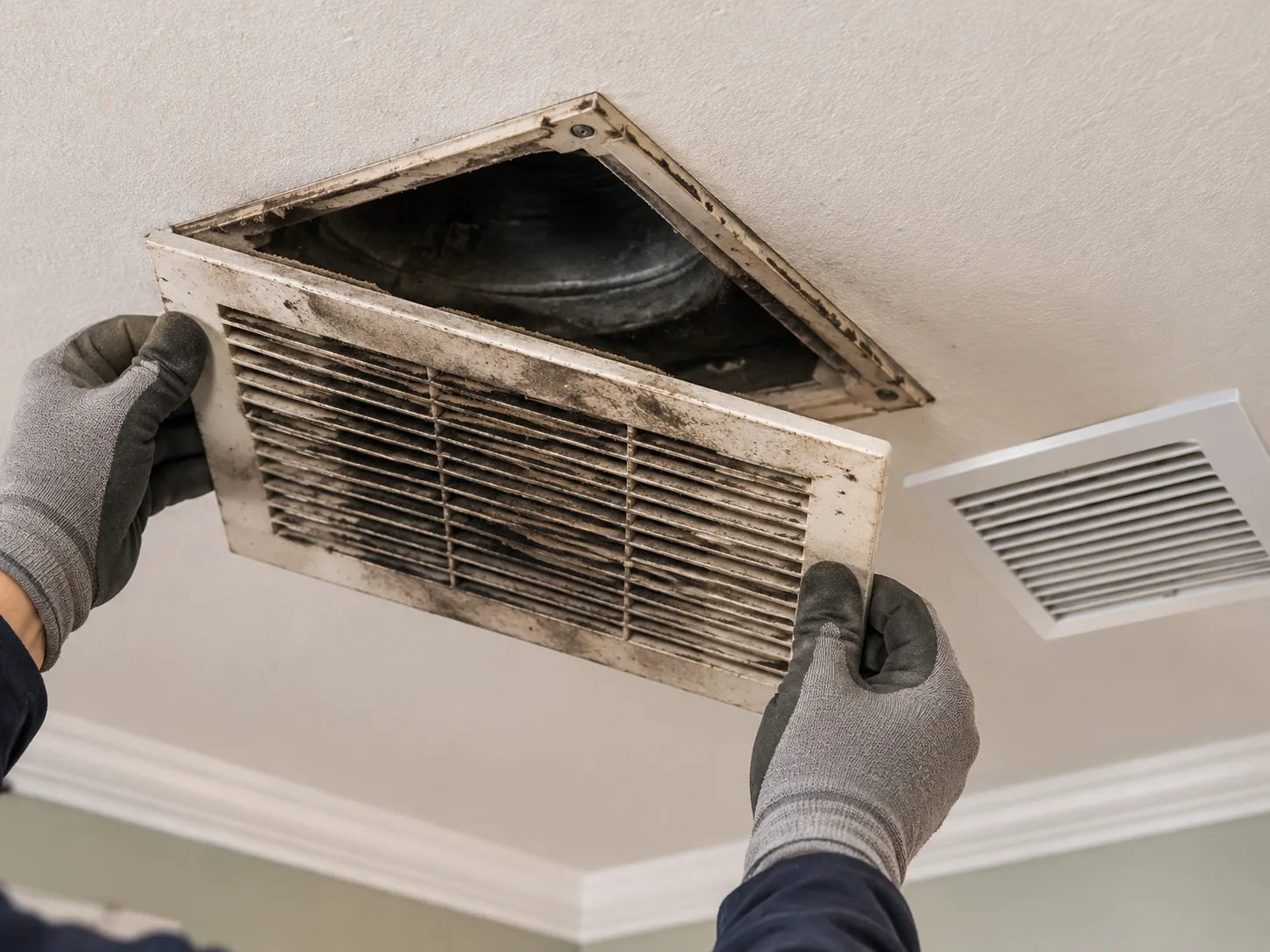
| HVAC system and ducts | Smell gets worse when the heat or AC turns on | Inspect and clean the ducts and air handler, and replace filters |
| Carpet and padding | Smell is strongest close to the floor | Replace padding; clean or replace carpet |
| Furniture, mattresses, curtains, clothing | Smell follows certain rooms or items | Professional contents cleaning, or replacement |
| Cabinets and closets | Smell when doors are opened | Clean inside surfaces, then seal if needed |
A consultant writing in R&R, a restoration trade magazine, described reviewing a house where the crew had cleaned, sealed, and fogged, and the smoke odor was still obvious as soon as you walked in. The missed source was smoke-soaked insulation in the attic. No amount of fogging could fix that until the insulation came out.
What actually removes smoke odor
Remove what can't be cleaned, clean what can, deodorize, and only then seal. Skipped steps and missed sources are why the smell usually comes back.
- Step 1Find every source
A good restoration company inspects hidden areas, not just the rooms you can see, and checks whether smoke reached the HVAC system.
- Step 2Remove what can't be saved
Badly burned or smoke-soaked drywall, insulation, and carpet padding usually have to go.
- Step 3Clean what can be saved
Walls, ceilings, framing, cabinets, and belongings are cleaned with methods matched to the type of soot. Oily soot from burned plastics needs different cleaning than dry soot from wood.
- Step 4Deodorize
Treatments such as thermal fogging, ozone, or hydroxyl generators neutralize the odor that cleaning leaves behind. These work best on surfaces that have already been cleaned.
- Step 5Seal
Framing and surfaces that stay in place may be sealed with an odor-blocking primer before new drywall or paint goes up.
- Step 6Recheck
Run the heat or air conditioning and walk through every room again before you sign off on the job.
Many professional restorers work to an industry standard, the IICRC S700 Standard for Professional Fire and Smoke Damage Restoration. It's fair to ask a company whether it does.
Fogging, ozone, hydroxyl, and sealing compared
Each method has a job. Fogging reaches into cracks and fabrics, ozone works fast but only in an empty house, hydroxyl is slower but can run with people around, and sealing locks in what's left after cleaning.
| Method | How it works | Can people stay inside? | Typical cost |
|---|---|---|---|
| Thermal fogging | A heated deodorizer fog travels where smoke went, into cracks, carpets, and fabrics | No, not during treatment | About $200–$600 |
| Ozone treatment | A machine produces ozone gas, which breaks down odor molecules | No. People and pets must be out, and the house aired out afterward | About $300–$800 |
| Hydroxyl generator | Produces hydroxyl radicals that break down odor more gradually | Generally yes, which is why it's often used in occupied homes | Varies; ask for a line-item price |
| Odor-blocking primer | Seals in leftover odor on cleaned framing and surfaces | Usually, with good ventilation (some primers have strong fumes) | Part of painting or rebuild costs |
About ozone: The U.S. Environmental Protection Agency describes ozone as a toxic gas and warns that ozone generators sold as air cleaners can produce unhealthy levels indoors. Professional ozone treatments are done in empty buildings for that reason. Don't buy a consumer ozone machine and run it in a house where people or pets are living.
What smoke odor removal costs
Most single-room smoke cleanups fall between a few hundred dollars and about $1,500. Whole-house odor problems that involve the HVAC system, insulation, or belongings cost more.
| Service | HomeAdvisor | HomeGuide | Angi |
|---|---|---|---|
| Smoke damage cleanup, per room | $200–$1,200 | $400–$1,500 | Not listed |
| Ozone treatment | $400–$800 | $300–$700 | $400–$800 (average about $600) |
| Thermal fogging | $200–$600 | Not listed | Not listed |
| Duct cleaning | $250–$500 | Not listed | Not listed |
| Furniture deodorizing | $200–$1,000 | Not listed | Not listed |
Note: Angi and HomeAdvisor are owned by the same company, so their figures may draw on overlapping data.
What this tells you:
- Room-by-room pricing is common. If an estimate covers the whole house, ask how many rooms and which hidden areas are included.
- The guides roughly agree on ozone. If a quote for a typical home is well outside $300–$800, ask why.
- The cheapest estimate may skip the hidden sources. An estimate that covers fogging but not the attic, ducts, or padding may cost less now and more later.
For the cost of a full fire restoration, see what fire damage restoration costs in Dallas–Fort Worth.
What you can do yourself
For light smoke from a small, contained fire, careful cleaning and fresh air can help. For anything more, or if the smell keeps coming back, you'll likely need professional help.
- Air the house out when the weather allows. It won't remove the source, but it lowers what's in the air.
- If smoke reached the HVAC system, keep it off until it's been checked, and put in a new filter before you run it again. If you need heat or AC in the meantime, ask an HVAC pro what's safe.
- Clean hard surfaces while wearing gloves and an N95 mask. Use a cleaner made for smoke residue, and wipe gently. Scrubbing can smear soot and push it deeper into the surface.
- Wash or dry-clean fabrics that smell of smoke, following the care label. Some may need more than one cleaning.
- Use a HEPA air purifier with activated carbon to reduce particles and some odor while cleanup continues. It helps but doesn't replace cleaning.
- Don't run a consumer ozone machine in a lived-in home.
- Don't paint over smoke-stained walls until they have been cleaned. The smell can come through new paint within weeks.
Mistakes that keep the smell around
Most come down to covering the smell instead of removing its source.
Avoid these mistakes
- Painting before cleaning. Paint and even odor-blocking primer only work on surfaces that have been cleaned first.
- Treating only the rooms you can see. If the attic, ducts, or wall cavities weren't checked, the smell has somewhere to come back from.
- Running the HVAC system too soon. It can spread soot and odor to rooms the fire never reached.
- Relying on air fresheners or candles. They cover the smell for a while and add odors of their own. Candles add soot, too.
- Signing off on the job on a mild day. Odor is easiest to miss when the heat and AC are off. Do the final check with the system running.
Before you sign off on the job: a walk-through checklist
Check the house with the heat or AC running, and get a fresh nose to do a sniff test.
Printable: odor walk-through checklist
- [ ] Every room smells normal after the house has been closed up for several hours
- [ ] Someone who hasn't been in the house lately did a sniff test (people who spend days inside stop noticing the smell)
- [ ] The heat or air conditioning has run for at least an hour, and the smell hasn't returned
- [ ] Closets and cabinets smell normal when opened
- [ ] The attic was inspected, and you know what was done there
- [ ] The ducts and air handler were inspected or cleaned, and filters were replaced
- [ ] Any sealing was done after cleaning, and the invoice or work notes show it
- [ ] Your belongings came back smelling clean, and the contents inventory is complete
- [ ] You have the company's written notes on what was treated and how
Frequently asked questions
How long does smoke smell last after a house fire?
Without proper cleaning, it can last for months. Odor from residue left inside walls, insulation, or ducts can keep returning until that residue is removed. Once the sources are removed or cleaned and the house is deodorized, the smell shouldn't keep coming back. If it does, something was missed.
Why does my house smell like smoke when the heat turns on?
Usually because soot is still in the ductwork, the air handler, or a space the system pulls air from. Warm air and airflow release the odor. Have the HVAC system inspected and cleaned before you rely on it again.
Is it harmful to live in a house that still smells like smoke?
Smoke residue can irritate your eyes, nose, throat, and lungs, especially for children, older adults, and anyone with asthma. If the smell is strong or you have symptoms, talk with your doctor and have the house rechecked before you spend more time there.
Will painting over the walls get rid of the smell?
Not by itself. Paint over smoke residue usually lets the odor come back through. Walls need to be cleaned first, and an odor-blocking primer may be needed before the final coat.
Is ozone safe?
Not while people or pets are inside. The EPA describes ozone as a toxic gas. Professional ozone treatments are done in empty homes, followed by airing out before anyone returns.
Does homeowners insurance cover smoke odor removal?
It depends on your policy and the cause of the smoke. Smoke damage from a covered fire is often part of the claim, but ask your insurer what's included before work starts. The Texas Department of Insurance Consumer Help Line, (800) 252-3439, can answer general questions about how policies work.
Your next step
If you're choosing a company to handle the cleanup, our guide to fire damage restoration in Dallas–Fort Worth covers:
If the fire was very recent, start with What to Do After a House Fire in Dallas.
Where to go next
Sources
- U.S. Environmental Protection Agency, "Ozone Generators that are Sold as Air Cleaners"
- Texas A&M AgriLife Extension, "How to Remove Smoke Smell from a Home"
- R&R Magazine, "Winning the Battle Against Smoke Odors: A Guide for Fire Restoration Technicians"
- R&R Magazine, "Options for Smoke Odor Removal After a Structure Fire"
- R&R Magazine, "Top Tips for Effective Smoke Odor Removal"
- ServiceMaster Restore, "'It Smells Fine' After a Fire" (February 2026)
- HomeAdvisor, "How Much Does Fire and Smoke Remediation Cost?"
- HomeGuide, "How Much Does Smoke Remediation Cost?"
- Angi, "How Much Does Ozone Smoke Odor Removal Cost?"
- IICRC, ANSI/IICRC S700 Standard for Professional Fire and Smoke Damage Restoration
- Texas Department of Insurance, insurance help and complaints